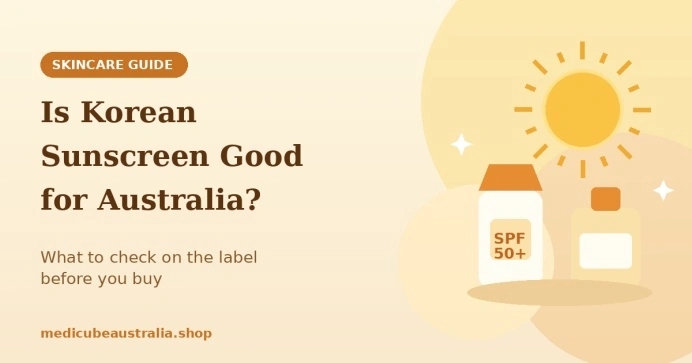
Is Korean Sunscreen Good for Australia? What to Know Before You Buy
Korean sunscreens have a cult following for good reason. They feel light, they rarely leave a white cast, and they’re pleasant enough that people actually wear them every day. But Australia has some of the strongest UV in the world, and its own rules about what a sunscreen has to be.
So is Korean sunscreen good enough for Australian sun? It can be, as long as you check a few things first.
Why people love Korean sunscreen
The appeal is mostly about wearability. Korean formulas tend to be thin, fast-absorbing and comfortable under makeup, with finishes that suit oily and combination skin. Many are designed to feel like a moisturiser or essence rather than a heavy lotion.
That matters more than it sounds. The best sunscreen is the one you’ll apply generously and reapply, and a texture you enjoy makes that far more likely.
The Catch: Australia regulates sunscreen differently
In Australia, sunscreens that make sun protection claims are treated as therapeutic goods. Unless they’re exempt, they must be included on the Australian Register of Therapeutic Goods (ARTG) before they can legally be sold here, and they’re tested to the Australian/New Zealand Sunscreen Standard (AS/NZS 2604).
A sunscreen made for the Korean market is built for Korean rules. That doesn’t make it poor quality, but it does mean it may not have been tested or listed for sale in Australia.
Where the two systems differ
Feature | Typical Korean label | What Australia expects |
Rating system | SPF plus a PA rating for UVA | SPF with broad-spectrum protection tested to the local standard |
Regulation | Korean cosmetic or functional rules | TGA oversight, with ARTG listing for most sunscreens |
Ingredients | May include UV filters common in Asia | Filters must meet Australian requirements |
Labelling | Often in Korean or minimal English | Clear English labelling, including an AUST L number where listed |
The differences are mostly about oversight and testing, not that one country’s sunscreen is automatically better.
How to check a sunscreen before you trust it here
A few minutes of checking saves a lot of risk, because Australian sun is unforgiving.
- Look for an AUST L number on the pack, which shows it’s listed on the ARTG. You can also search the register on the TGA website.
- Check the label says SPF 50 or 50+, broad-spectrum and water-resistant.That’s the standard recommendation for Australian conditions.
- Buy from a reputable Australian seller. Official stockists reduce the risk of counterfeits and old stock.
- Be cautious with overseas-only products. If it isn’t sold for use in Australia, you can’t be sure how it was tested.
So, is it good enough for Australian sun?
A Korean sunscreen that’s legally supplied in Australia and meets the label checks above is a perfectly sensible choice, and its nicer texture may help you use it properly. One that’s only sold overseas is harder to judge, so you’re better off choosing a listed alternative for your main daily protection.
Where Medicube comes in
The Medicube range we feature is built around treatment steps: cleansers, toner pads, serums, creams, masks and devices. It isn’t a sunscreen line, and we’d rather say so than stretch the topic.
But sunscreen matters more when you use these products. Exfoliating pads like the Zero Pore Pad and brightening products such as the Deep Vita C Pad and the TXA Niacinamide 15% Serum are meant to improve tone and texture, and skin that’s being refined is skin you want to protect. You can look through those treatment steps at Medicube Australia, where each product links to its Amazon listing. We’re an affiliate site, so you complete your order on Amazon.
Sunscreen mistakes worth avoiding
- Using too little. Most people apply far less than the amount tested on the label.
- Skipping reapplication. Reapply roughly every two hours outdoors, and after swimming or sweating.
- Relying on makeup with SPF. It rarely gets applied thickly enough to deliver the number on the label.
- Forgetting the neck, ears and hands. These areas show sun damage early.
FAQs
Is Korean sunscreen good for Australia?
It can be, provided it’s legally sold in Australia and meets local label standards. The formula may be lovely, but compliance and testing are what make it suitable here.
Can I use Korean sunscreen bought overseas?
You can, but you can’t be sure it was tested to Australian standards. For daily protection, a product listed for use here is the safer choice.
How do I know if a sunscreen is listed in Australia?
Look for an AUST L number on the pack and check it against the TGA’s register.
What SPF should I use in Australia?
SPF 50 or 50+, broad-spectrum and water-resistant is the usual recommendation for everyday use in Australian conditions.
Is Korean sunscreen better than Australian sunscreen?
Neither is better by default. Korean sunscreens are often more pleasant to wear, while Australian sunscreens are tested and listed for local use.
Do I still need sunscreen if I use exfoliating or brightening products?
Yes, more than ever. Acids and brightening actives are used to refine skin, and daily sun protection helps protect those results.
Does Medicube make sunscreen?
The Medicube products featured on our site cover cleansers, pads, serums, creams, masks and devices. If you’re considering any sunscreen, check the listing and label for Australian details before you buy.
The Takeaway
Korean sunscreen isn’t a problem in itself. The question is whether the one you’re holding has been tested and listed for Australian conditions. Check the AUST L number, choose SPF 50+, and apply plenty. This article is general information and doesn’t replace advice from your doctor or dermatologist.