Is Korean Skincare Good? What Works, What Doesn’t, and Who It Suits
Korean skincare is everywhere: in your social feeds, on pharmacy shelves, and in the bathroom cabinets of friends who suddenly talk about “glass skin”. So it’s fair to ask whether it’s actually good, or just very well marketed.
The honest answer is that it’s both. Some of what makes Korean skincare popular is genuinely useful, and some of it is hype. Here’s how to tell the difference.
What Korean skincare does well
The biggest strength is the philosophy behind it. Instead of treating skin only when something goes wrong, K-beauty focuses on keeping the skin barrier healthy day to day. That usually means plenty of hydration, gentle cleansing, and daily sun protection.
Three things tend to stand out:
- Hydration first. Lightweight toners, essences and gel creams add moisture in thin layers, which suits people who find heavy creams greasy.
- Gentle formulas. Many products are designed to be mild enough for regular use, with soothing ingredients like centella (cica) and panthenol.
- Fast-moving innovation. Korean brands are quick to bring new ingredients and formats to market, from exfoliating toner pads to PDRN serums and at-home devices.
The texture and finish also matter more than people admit. Products that feel pleasant tend to get used consistently, and consistency is what makes any routine work.
Where the hype runs ahead of the science
Not everything in a K-beauty routine earns its place. A few things are worth keeping in perspective:
- More steps aren’t automatically better. The famous ten-step routine is more of a menu than a rulebook. Most people do well with four or five.
- Some newer ingredients have limited evidence. Ingredients like PDRN are promising and popular, but research on how much they change skin when used in a cosmetic product is still developing. Treat them as a nice extra, not a miracle.
- “Gentle” isn’t guaranteed. Some Korean products contain fragrance, essential oils or strong acids. Check the ingredient list instead of trusting the label.
- Results take time. Most routines need several weeks before you can judge them fairly.
Who Korean skincare suits best
Korean skincare works well for most skin types, but different people benefit in different ways.
Skin type | What usually helps |
Dry or dehydrated | Hydrating toners, essences and richer creams |
Oily or congested | BHA toner pads, lightweight gel moisturisers |
Sensitive | Fragrance-free, soothing formulas, introduced slowly |
Dull or uneven | Vitamin C, niacinamide or gentle exfoliants |
Mature | Peptide, collagen and moisture-rich formulas |
If your skin is very reactive or you’re managing a condition like eczema or rosacea, talk to a pharmacist or dermatologist before adding new actives.
What Australians should know before buying
Australia’s climate and rules add a few considerations that overseas guides tend to skip.
The sun is the big one. Sunscreen sold here is regulated as a therapeutic product, so a sunscreen bought from an overseas store may not meet local requirements. Look for one that’s listed for sale in Australia, and apply it generously every day.
It’s also worth buying from sellers you trust. Popular Korean products are a common target for fakes, so check the seller and the packaging details before you order. If you’re not sure where to start, our guide on where to buy Korean skincare in Australia covers the main options.
How to start without wasting money
You don’t need a full shelf of products. A simple starting point is a gentle cleanser, one treatment product such as a toner pad or serum, a moisturiser, and sunscreen in the morning. Add one new item every couple of weeks and stop if your skin gets irritated.
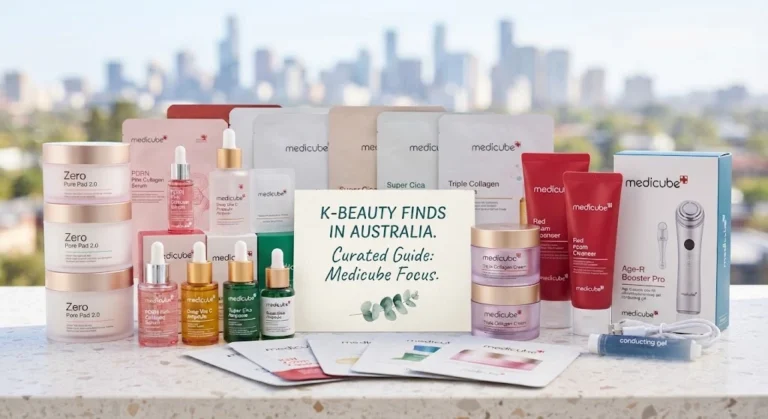
If you want a ready-made example, the Medicube Australia lays out its range by routine step, with skin-concern pairings for pores, dryness and dullness.
FAQs
Is Korean skincare better than Western skincare?
Not better, just different. Korean skincare leans toward hydration and gentle layering, while Western skincare often focuses on stronger single actives. Good products exist in both, and the best routine is the one your skin tolerates.
Is Korean skincare good for acne-prone skin?
It can be. Lightweight moisturisers and BHA products suit many people with congested skin, but acne varies a lot. If breakouts are persistent or painful, see a doctor or dermatologist.
Is Korean skincare safe to use every day?
Gentle cleansers, moisturisers and sunscreen are made for daily use. Exfoliating pads, acids and retinol are best used less often and built up slowly.
How long does Korean skincare take to work?
Hydration shows up quickly, often within days. Changes in texture or tone usually need four to eight weeks of regular use.
Final thoughts
Korean skincare is good when you use it for what it does best: keeping skin hydrated, comfortable and protected. It isn’t magic, and you don’t need every step or trend. Choose a few products that suit your skin, buy from reliable sellers, and give them time to work.